4 min read
Podcasts used to have a scarcity problem. There weren't many shows, so you listened to the handful you liked, all the way through, and waited for the next one.
That problem is long gone. Now there's an interview you'd genuinely learn from, a deep dive on the exact thing you're curious about, and a conversation between two people you'd pay to overhear, all sitting in the same week, all running long. The shows got better and the time you have didn't grow.
So the real question about AI and podcasts isn't whether it will show up in how you listen. It already has. The question is which job you let it do.
There's more worth hearing than there are hours
Most of us deal with abundance in one of two ways. We stop discovering, because a new show just adds guilt to a pile we're already behind on. Or we keep subscribing and let the backlog quietly turn into a to-do list we never finish.
Neither is what you signed up for when you started listening. The point of a podcast was never to finish it. It was to hear something that changed how you think, made you laugh, or gave you a story worth passing on. Often that something lives in one stretch of a long episode, and the rest is the road that leads to it.
The old tools give you two choices: play the whole thing, or skip around and hope. That's the gap software can actually fill.
Where AI helps: finding, not replacing
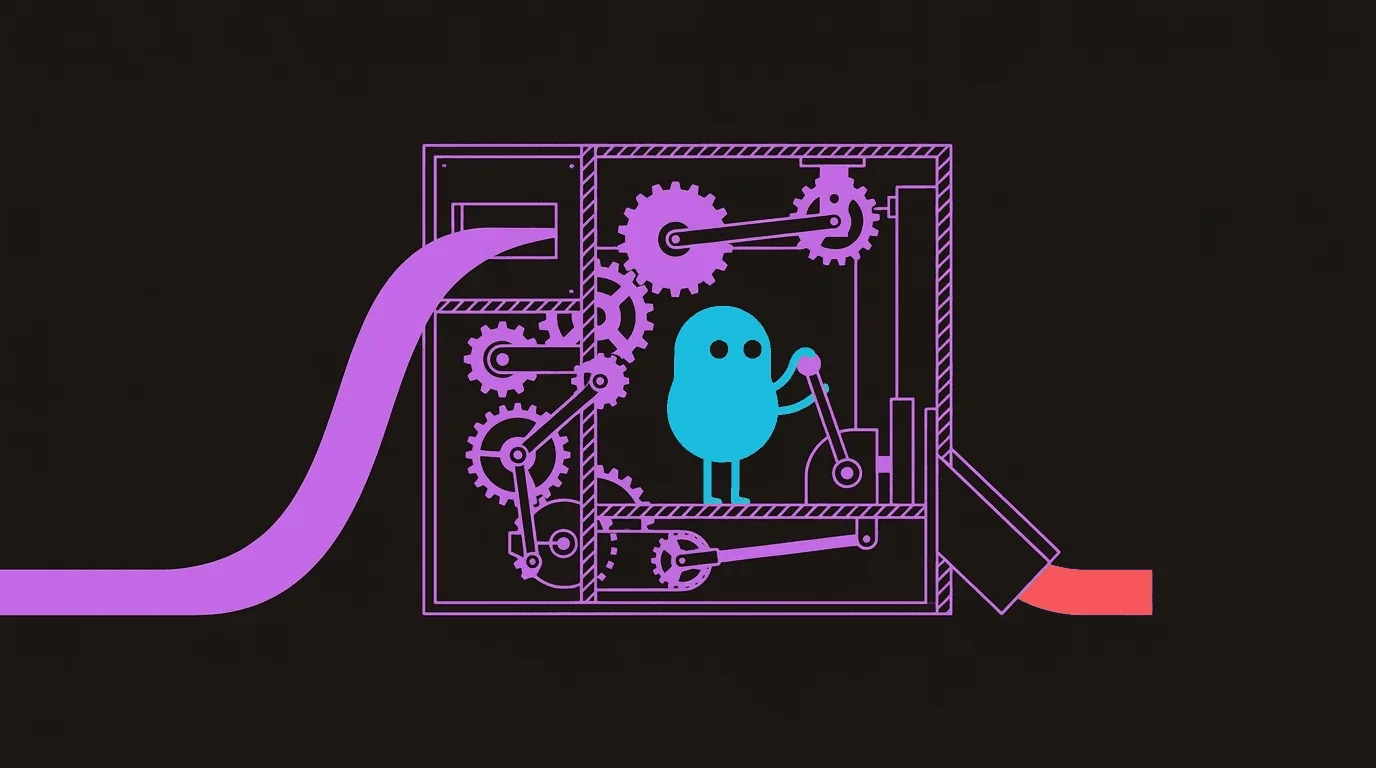
Here's where these tools earn their keep. A computer can listen to an entire episode, transcribe it, notice where the conversation changes subject, and tell the difference between a real idea and five minutes of housekeeping. It can do that for hundreds of episodes you'll never have time to scan yourself.
That's a searching job, and it's a good one to hand off. It's tedious, it scales badly for humans, and getting it slightly wrong costs you very little, because you're still the one who decides what to listen to.
Used this way, AI works like a very patient friend who went through everything and says: this part, start here, it's worth your time.
Where it hurts: when the summary becomes the show
The other option is to let AI stand in for the podcast itself: read the transcript, compress it into bullet points or a paragraph, maybe have a synthetic voice read that paragraph back to you. It's fast, and it feels efficient.
But a summary keeps the conclusions and drops almost everything that made them stick. You lose:
- the host's tone, and whether they were joking, unsure or dead serious
- the pause before a hard admission
- the back-and-forth where a guest gets pushed and changes their mind
- the story that made the point memorable in the first place
You end up knowing that someone said something without having heard them say it. That's why summaries tend to slip away so quickly. They hand you information without the experience that makes information memorable. If you've ever read a neat recap of an episode and forgotten it by lunch, you know the feeling.
The best use of AI in listening is to get you to the moment faster, not to hear it for you.
A better split: software searches, you listen
Everything at Briefly follows from that line. The software does the searching. It works through full episodes, finds where one complete thought starts and ends, cuts out the ads and filler, and puts what's worth hearing on your feed. What you actually play is the real audio from the original episode, in the host's own voice.
Each of those moments is a Brief. A Brief is one complete thought, from start to finish, including the follow-up that belongs with it. It runs 5 to 15 minutes, long enough to hear an idea properly and short enough to fit between the other things in your day. No sponsor reads in the middle, no "before we get started" preamble.
A few things follow from that choice:
- You hear what was actually said. Nothing gets paraphrased, so nothing gets lost in paraphrase.
- Discovery gets cheaper. Trying a new show means one Brief, not a two-hour commitment.
- The full episode is still there. If a Brief grabs you, the conversation it came from is waiting in whatever app you already use.
AI will keep getting better at summarizing, and summaries will keep having their place: skimming a meeting, checking a fact, deciding whether something is relevant. Listening is a different activity. It's the sound of one person explaining something to another, and it doesn't compress.
What this means for you
You don't need to pick between keeping up and actually enjoying what you hear. Let the software sort through the hours and keep the listening for yourself. That's the bet behind Briefly: every podcast worth hearing, in the time you actually have, in the voice of the person who said it.